
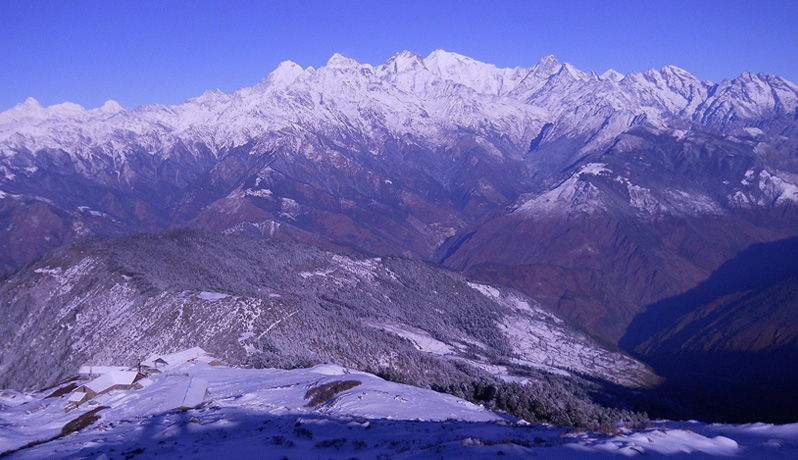
Langtang Gosaikunda Helambu Trekking is the ascends toward to Gosaikunda region, a sacred area dotted with high altitude lakes that are considered holy in both Hindu and Buddhist traditions. The most famous lake, Gosaikunda Lake, sits at an altitude of around 4,380 meters and is a spiritual pilgrimage site for many Nepalis, especially during the Janai Purnima festival. Along the way, trekkers encounter alpine meadows, prayer flags fluttering in the wind, and panoramic views of the Langtang Lirung and other surrounding peaks. After soaking in the spiritual and natural beauty of Gosaikunda, the trail descends into the Helambu region, a culturally rich area known for its warm Tamang and Sherpa communities. Helambu is characterized by terraced fields, traditional Buddhist monasteries, and charming villages such as Melamchi Gaun and Tarke Ghyang. Trekkers here experience a gentler landscape compared to the high-altitude terrain of Gosaikunda, with lush forests, fruit orchards, and rich cultural heritage. The trek concludes as the trail gradually descends back toward Sundarijal making a loop that brings trekkers full circle to the outskirts of Kathmandu. Along the way, travelers enjoy the perfect combination of remote Himalayan landscapes, sacred lakes, vibrant local culture, and authentic rural life.
Continuing the trek, the route ascends via Thulo Syabru and Sing Gompa toward the sacred alpine lakes of Gosaikunda, a revered pilgrimage site for both Hindus and Buddhists. After crossing the Lauribinayak Pass (4,610 m), the trail heads south, leaving the Langtang region and entering the Helambu Valley. Historically known as Yalmoganriwa, meaning “land enclosed by snow-capped mountains,” the Helambu Valley lies in today’s Sindhupalchok District. The valley is the source of the Melamchi River, with Dorje Lakpa (also called Bajra Saddhu) dominating the skyline. Rich in spiritual significance, the region is home to numerous monasteries, meditation centers, and sacred caves. Among the most notable are the Guru Dukphok Cave of Padmasambhava, which can accommodate up to 20 meditators, and the meditation caves near Thimbu, where the 11th-century Tibetan Mahasiddha Milarepa practiced. The powerful female deity Ama Yangri Dharmapal is particularly revered here. The Langtang Gosaikunda Helambu Trek offers a remarkable circuit that blends dramatic mountain scenery, sacred landscapes, and living Himalayan culture, making it one of the most fascinating trekking and spiritual tourism destinations in Nepal.
Langtang Gosaikunda Helambu Trek Highlights:-
Langtang valley:- Known for its pristine beauty and diverse flora and fauna. You'll walk through dense forests, cross high alpine pastures, and pass traditional Tamang and Sherpa villages.
Gosaikunda Lake:- A sacred lake for Hindus and Buddhists, Gosaikunda is at an altitude of about 4,380 meters. The lake freezes in winter and is surrounded by stunning mountain views. Thousands of pilgrims visit during the Janai Purnima festival.
Helambu Region:- Famous for its Buddhist culture, monasteries, and scenic landscapes. The region is less crowded, offering a peaceful trekking experience while interacting with the Hyolmo community, an ethnic group from Helambu.
Best Time to Langtang Gosaikunda Trek:-
Spring (March to May):- Best for wildflowers, especially rhododendrons, and moderate temperatures.
Autumn (September to November):- Clear skies and excellent visibility of mountains.
Difficulty Level of Langtang Gosaikunda Trek:-
Moderate to Challenging:- The trek involves several ascents and descents with some high-altitude sections, particularly at Gosaikunda and Lauribina Pass. Prior trekking experience is recommended, but it's not strictly necessary for those with good fitness levels.
Permits Required:- Langtang National Park Entry Permit and TIMS (Trekkers' Information Management System) Card.
Accommodation:- Tea Houses and Lodges are available along the route, offering local facilities with meals to chooice from menu.
Trekking through the Helambu region indeed offers an immersive experience into the unique lifestyle and culture of the Yolmo people, as well as the awe-inspiring beauty of the Himalayas. The terraced fields, meticulously carved into the mountainsides, showcase the ingenuity and resilience of the local farmers who have cultivated these lands for generations. As you journey through the villages, you'll be enveloped by the genuine warmth and hospitality of the residents, whose way of life is deeply intertwined with the natural rhythms of the mountains. Their simple yet profound connection to the land and its resources is a testament to the sustainable practices that have sustained them for centuries. Reaching the summit of Laurebinayak, with its commanding views of the Langtang range and beyond, is undoubtedly a highlight of the trek. The sheer majesty of the towering peaks, juxtaposed against the serene beauty of the surrounding landscape, is a sight that leaves an indelible mark on the soul. Indeed, trekking in Nepal is not just about traversing physical terrain; it's about immersing oneself in the rich tapestry of culture, history, and natural beauty that defines this remarkable country. Each step taken is not just a journey through the mountains but also a journey inward, towards a deeper understanding of oneself and the world around us.